
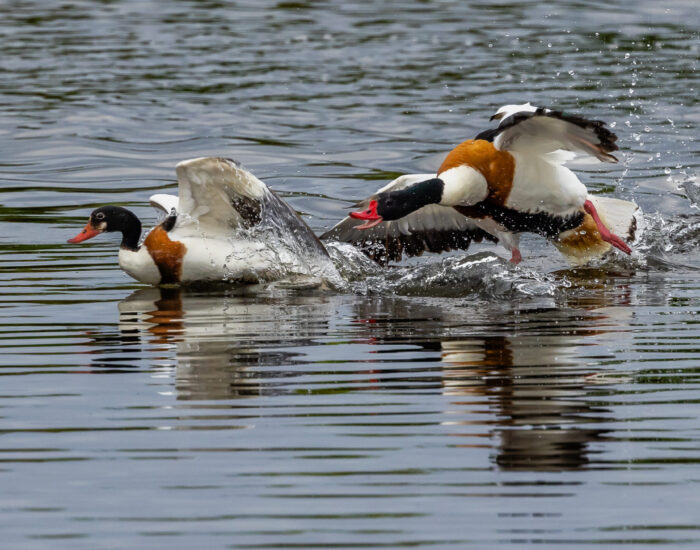
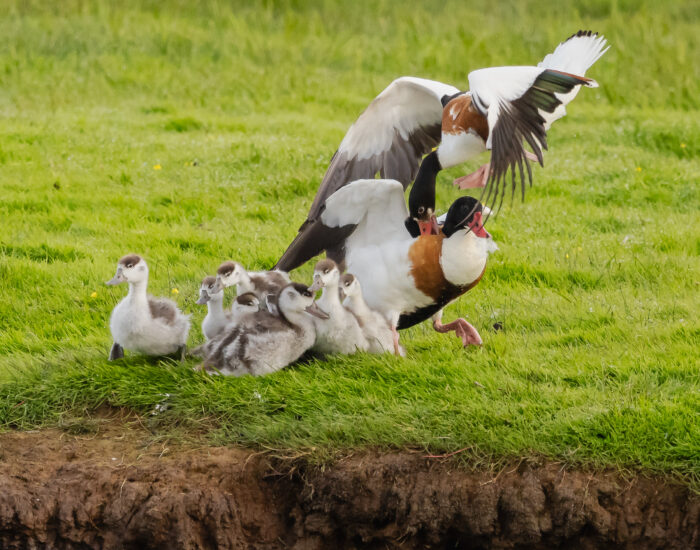
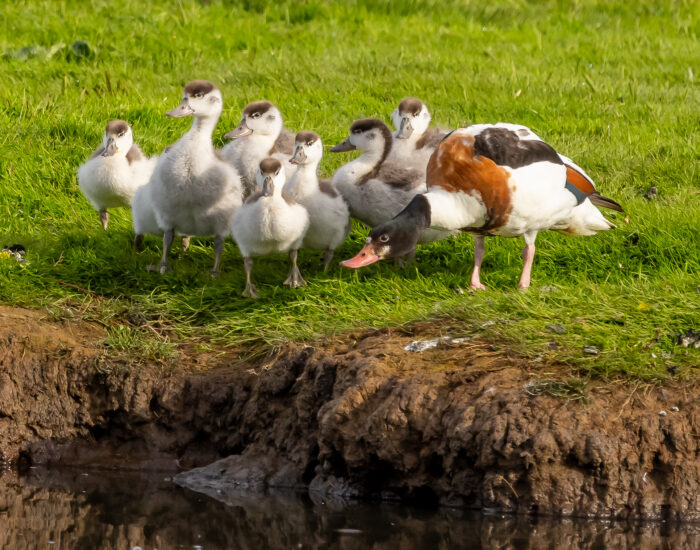
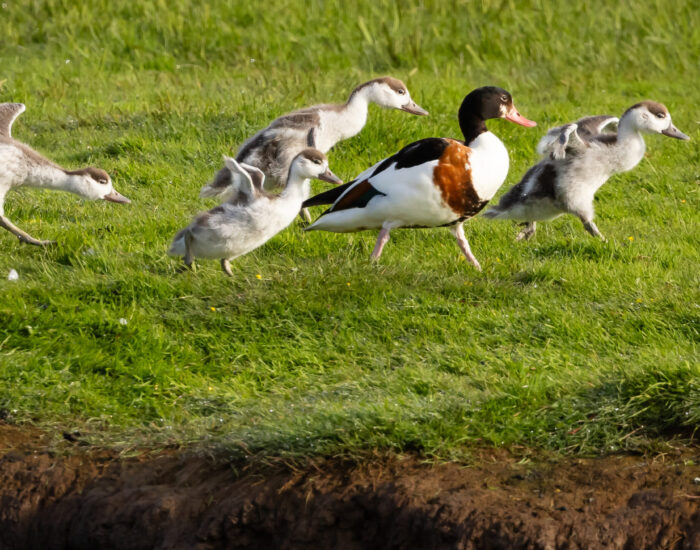
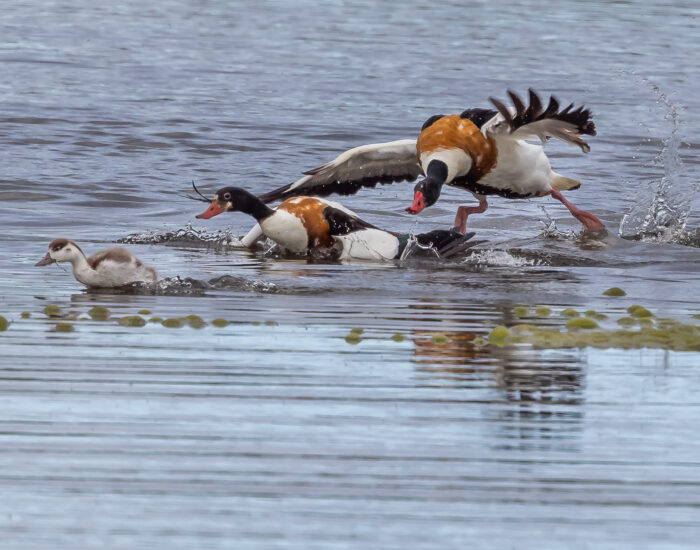
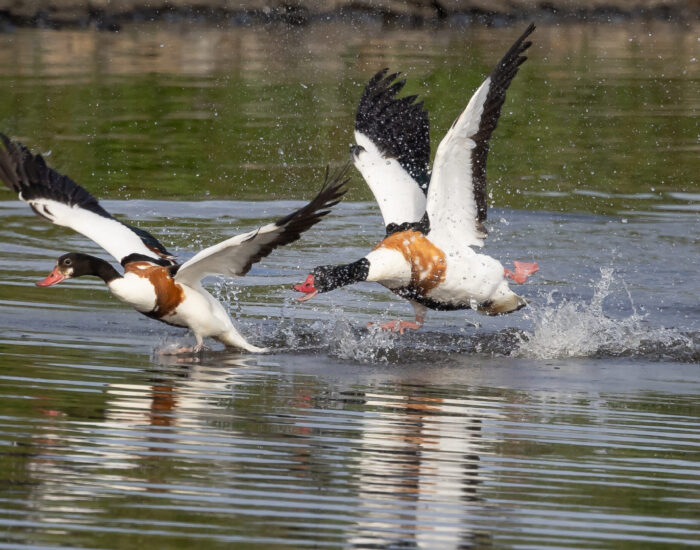
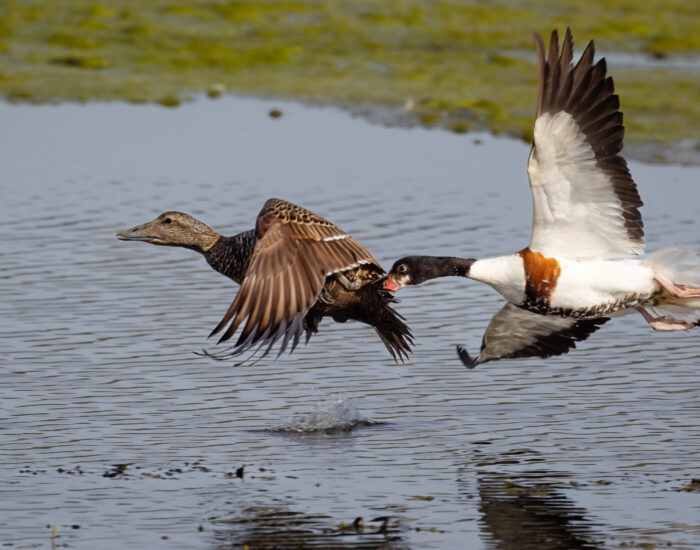
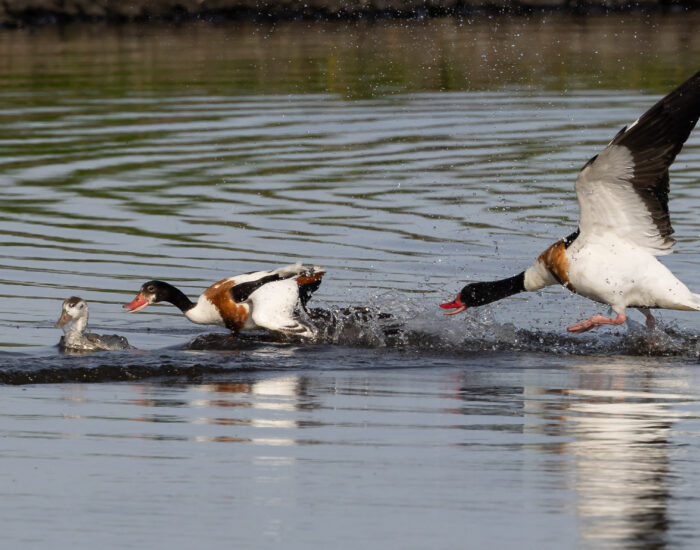
In the summer of 2025, I watched a shelduck and her ducklings struggle to survive on a pond near Mosfellsbær, Iceland. She repeatedly clashed with other ducks and black-headed gulls that pushed into her territory, and an arctic fox also occasionally entered the area. A single mother by early summer, she had 10 ducklings in June; that number fell to eight in early July and later to seven. A shelduck pair on the same pond had seven ducklings in early July, but only six when I last saw them that summer. The pair often quarreled with other birds and seemed to want the pond to themselves. The drake sometimes tried to drive the lone mother and her brood away, but she defended them fiercely with her strong bill.
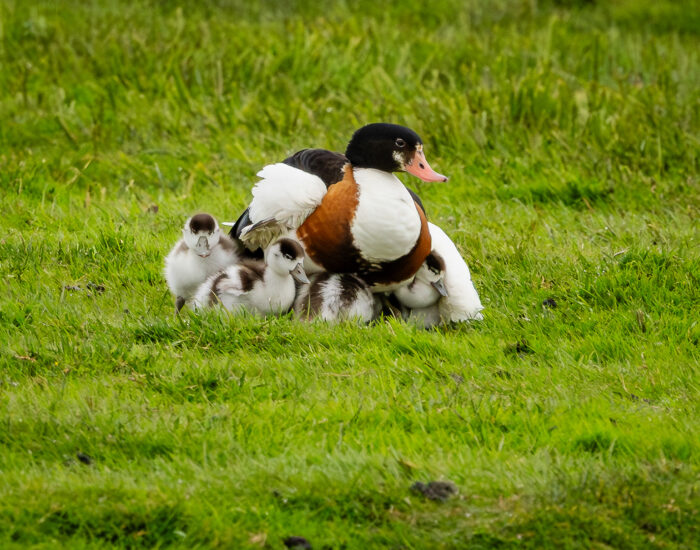
She protected her young not only by fending off threats. In cold weather, she spread her wings to shelter the ducklings against her warm body, as shown in the video above.
In the summer of 2025, I watched a shelduck and her ducklings struggle to survive on a pond near Mosfellsbær, Iceland. She repeatedly clashed with other ducks and black-headed gulls that pushed into her territory, and an arctic fox also occasionally entered the area. A single mother by early summer, she had 10 ducklings in June; that number fell to eight in early July and later to seven. A shelduck pair on the same pond had seven ducklings in early July, but only six when I last saw them that summer. The pair often quarreled with other birds and seemed to want the pond to themselves. The drake sometimes tried to drive the lone mother and her brood away, but she defended them fiercely with her strong bill.
She protected her young not only by fending off threats. In cold weather, she spread her wings to shelter the ducklings against her warm body, as shown in the video above.
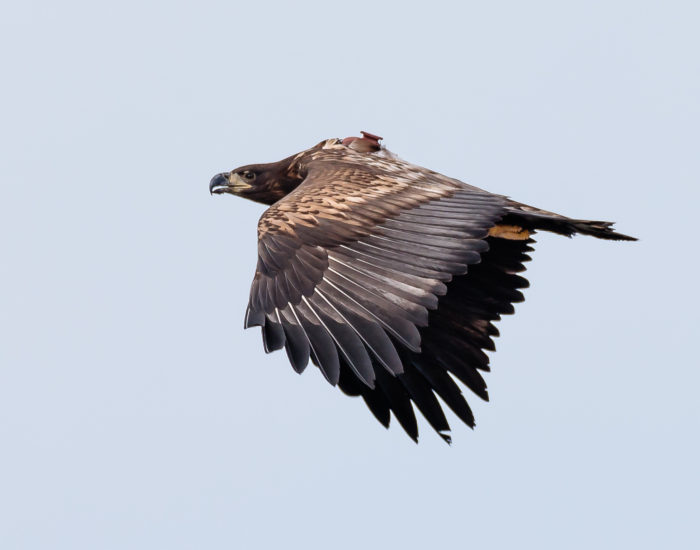
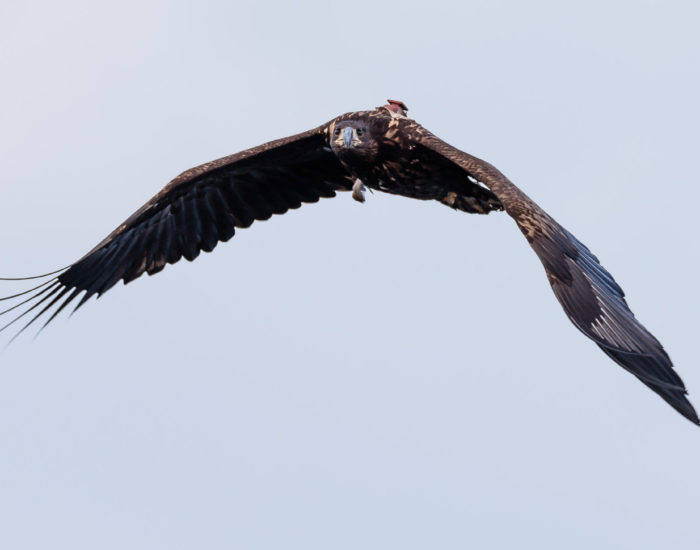
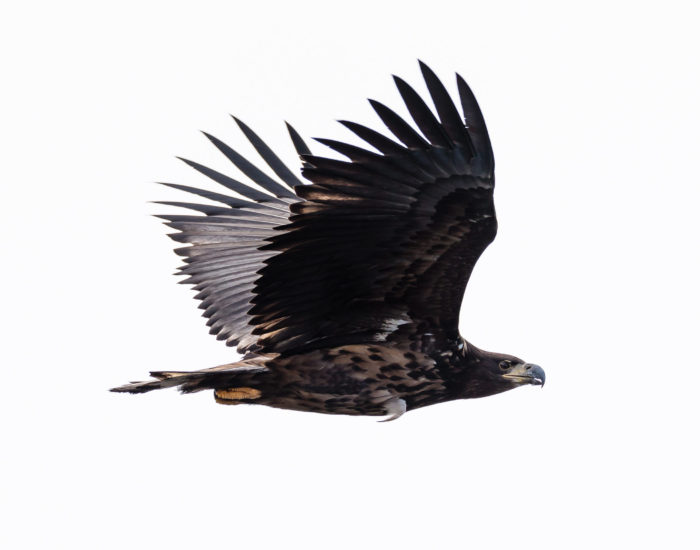
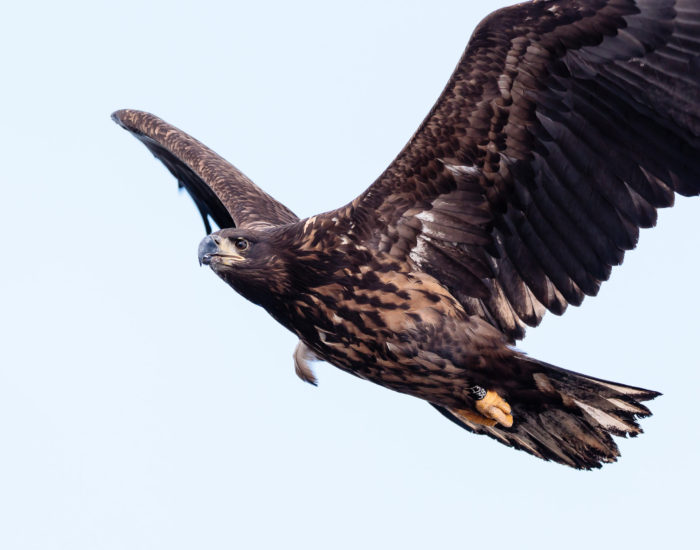
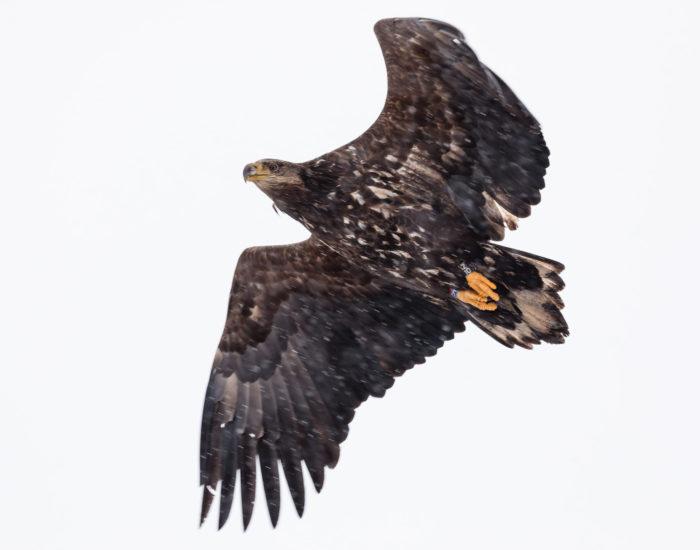
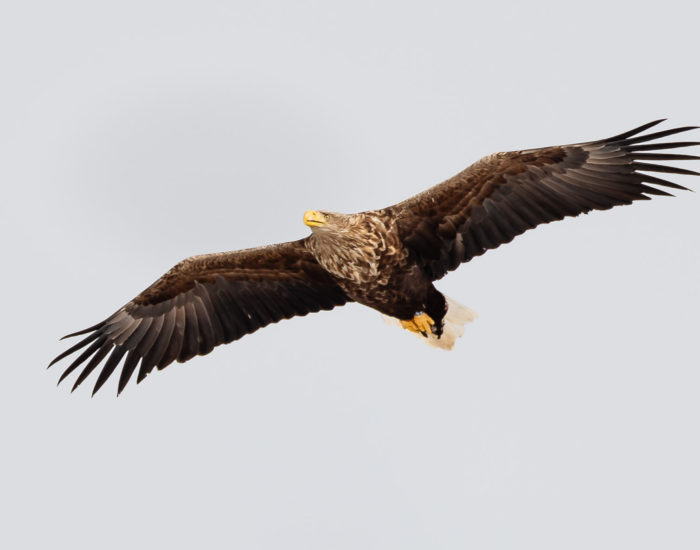
A young White-tailed Eagle flew over me and my wife when we sat on the shore close to Ögur, a farm near Stykkishólmur in West-Iceland. The eagle had a tag on its leg, I3/38, and is a female, called Helga. She was tagged in a nest in southern Breiðafjörður last summer. She has had a GPS data logger on its back since shortly before she fledged. The device is very noticeable, as can be seen on the photos. It was designed to catch enough light to charge a solar battery that powers the logger. This technique has been tested thoroughly in other countries and doesn’t effect the behavior of the birds.
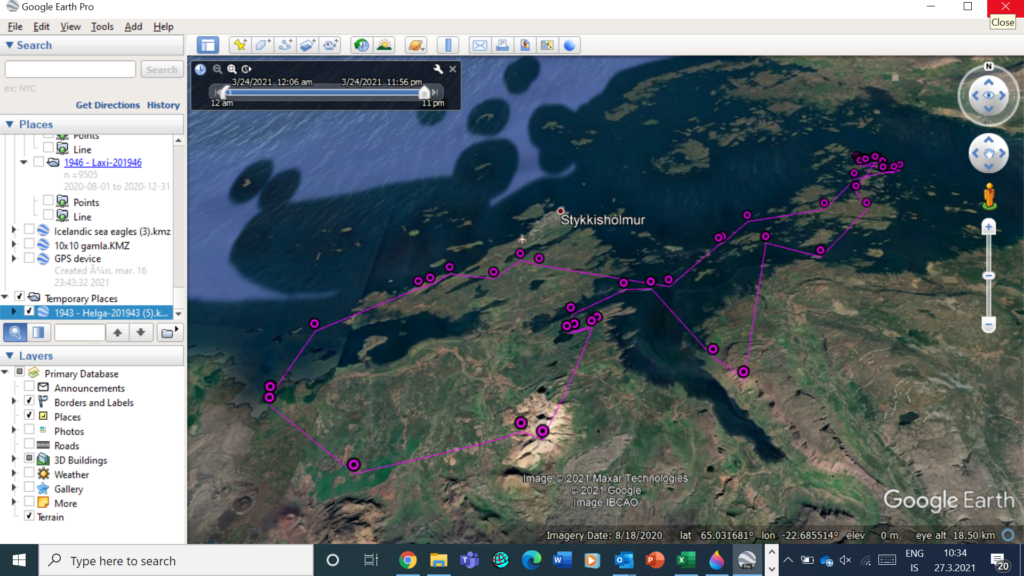
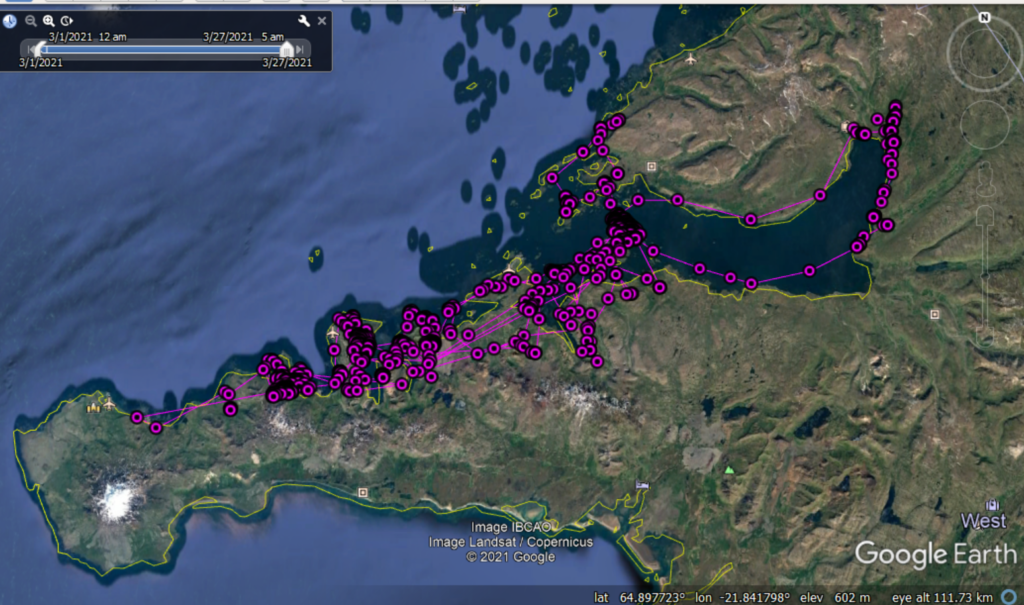
Helga stayed in her parents’ territory until February, which is not unusual because most young White-tailed Eagles leave home quite late, compared to many other birds. The picture on the right below shows how widely Helga travelled in southern Breiðafjörður the first 26 days of March. The photo on the left shows how the logger tracked the movements of the eagle on March 24, the day I took the pictures.
Helga is among fourteen young White-tailed Eagles that have such loggers. The tracking devices have provided new and important data on the movements of White-tailed Eagles in Iceland the last couple of years. It is assumed that the birds will have the devices their whole life so it will be possible to map their movements with precision during their lifetime. According to the Icelandic Institute of Natural History this data will be useful when scientists assess the importance of certain areas for birdlife, for instance where we should avoid raising windmills, which can endanger eagles more than other birds.
Shortly after we saw Helga another young White-tailed Eagle flew over us. It had the tag I2/10 and also hails from southern Breiðafjörður. It will be two years old next summer. This day we also saw two adult White-tailed Eagles hovering over us close to Stykkishólmur. I thank my wife for this, because she is a real magnet for eagles.
.
Great Cormorant
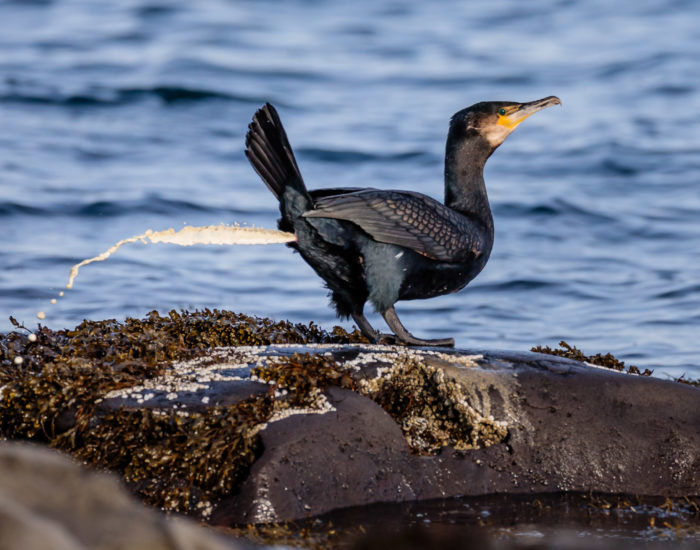
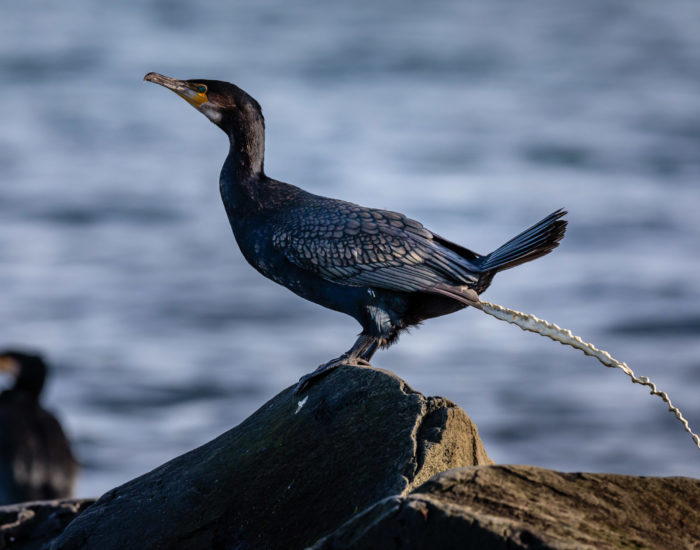
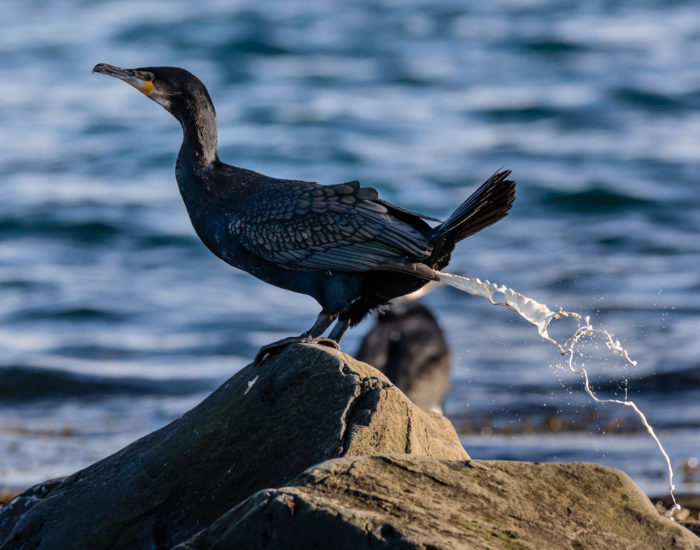
When people watch Great Cormorants they should make sure they are in front of the birds, not behind them. Otherwise it can be quite messy. Great Cormorants breed mostly in the western part of Iceland, Faxaflói and Breiðafjörður. Outside the breeding season the birds disperse and can be found all around Iceland.
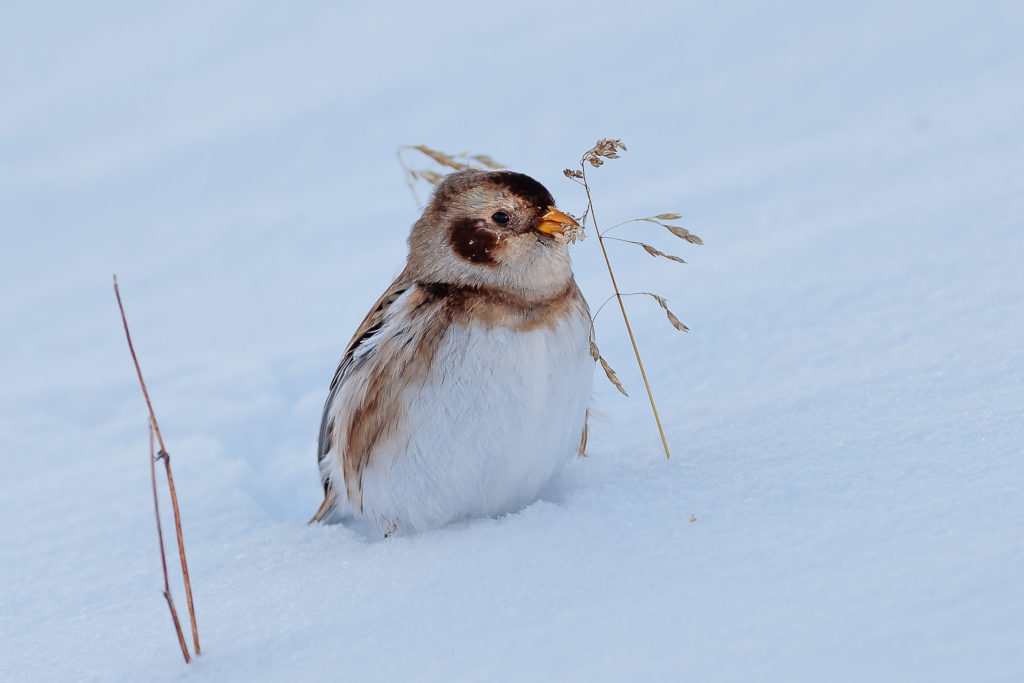
Snow Bunting
A Snow Bunting finds one of the final straws in the snow. It’s a high Arctic bird and is common in barren rocky areas in Iceland. Snow Buntings only appear in towns when snow makes it impossible for them to find food.